the Creative Commons Attribution 4.0 License.
the Creative Commons Attribution 4.0 License.
 | 25 Nov 2026
The fate of Y. S. (Yisi) Ma, China's first female geologist within the historical records of Chinese geosciences

In April 1944 during the War of Resistance against Japan, three young scientists were killed by bandits in the field. Among the three were Ms. Y. S. Ma, the only female geologist in China at the time, a young geologist fluent in five foreign languages despite never having been abroad, and Mr. T. Y. Hsu and Mr. K. Chen, both budding and accomplished geologists. They were killed on the same day, at the ages of 25, 36, and 28 respectively. This year marks the 82nd anniversary of their tragic deaths. This article is dedicated to these three young scholars who died before achieving their goals, leaving future generations deeply saddened. Through the experiences of these individual scientists, readers can sense the enormous challenges faced by GSC, China's first scientific institution at the time – a case to know the whole picture from a single spot.
- Article
(972 KB) - Full-text XML
- BibTeX
- EndNote


As China's first truly scientific education and research institution, the Geological Survey of China (GSC) achieved tremendous success within just a few years of its establishment, creating many firsts in Chinese geological education, research, and mineral exploration, and even some world firsts. However, this came at a heavy price; many geologists died young for various reasons. Especially during World War II, with the Japanese occupation of most of eastern and central China, almost all universities and research institutions in these developed regions in the east of the country had to relocate to the western rear areas of the war effort to continue geological surveys and research. At that time, bandits roamed freely in China, especially in the southwestern border regions, posing a significant threat and causing immense losses to the developing GSC. Following the tragic murder of the brilliant Chinese geologist Y. T. Chao by bandits in Zhaotong, Yunnan Province in 1929, 15 years later, in April 1944 during the War of Resistance against Japan, three more young geologists were killed by bandits in Guizhou Province, bordering eastern Yunnan.
On 24 April 1944, a momentous event that shocked the entire nation occurred. Y. S. Ma (Ms. Ma), China's first and, at the time, only female geologist, along with two of her colleagues and mentors, T. Y. Hsu (Mr. Hsu) and K. Chen (Mr. Chen), were tortured and ultimately murdered by local bandits while conducting a field geological survey in Guizhou Province in southwest China. This incident, once revealed, shocked the nation and quickly reached the highest levels of government. The reasons were as follows: First, the general level of education among the Chinese people at that time was extremely low, and those with a university education were extremely rare. The sudden murder of three highly educated intellectuals naturally shocked and was unacceptable to the public. Second, the research institution where the three worked, the GSC, was not only China's leading modern scientific and technological research institution at the time, but also the only research institution actively supporting China's war of resistance against Japan. They organized the development of China's unique tungsten, tin and other mineral products, selling them overseas to earn foreign exchange to support China's just actions against the invaders, and/or directly exchanging these ores for urgently needed weapons and ammunition for the war effort. Thirdly, Dr. Wen-hao Wong (Dr. Wong), the former director of the GSC at the time, had risen to a high-ranking position in the Chinese government and could directly communicate with Chiang Kai-shek, the then-leader of China. This then-Minister of Economic Affairs, Dr. Wong, a geologist, rose to the highest position of Premier of the Executive Yuan of the Kuomintang (Executive Council of the Central Authorities throughout China before 1949 and in Taiwan afterwards) approximately 3 years later. Fourthly, one of the deceased, Ms. Ma, was China's first and only female geologist at the time. This was her first real fieldwork after graduating from university, and later events proved it to be her only field geological survey and research in her lifetime. Following the poem by the great Tang Dynasty poet Du Fu mourning Zhuge Liang, a famous figure from the Three Kingdoms period, Ms. Ma also “died before her mission was accomplished, leaving heroes to weep with sorrow”. Even more tragically, unlike the two male companions who were also murdered, Ms. Ma suffered immense torture and humiliation before her death, a fate too painful to recall.
This article attempts to reveal, through the experiences of Ms. Ma and two geologists who perished alongside her, the numerous predicaments and immense challenges faced by Chinese scientists and technologists forced to relocate from the more developed east to the remote western frontier during World War II. At that time, all the Chinese educators and scientists forced to move west faced not only severe difficulties such as frequent enemy bombing raids, severe shortages of basic necessities like food, currency devaluation, and soaring prices, but also serious banditry and life-threatening dangers – especially for scientists forced to conduct geological surveys in remote wilderness areas. The fate of a specific individual in a specific time and space is, in fact, a microcosm and reflection of the fate of their institution within the broader social context, and also a reflection of the fate of the entire nation during that period.
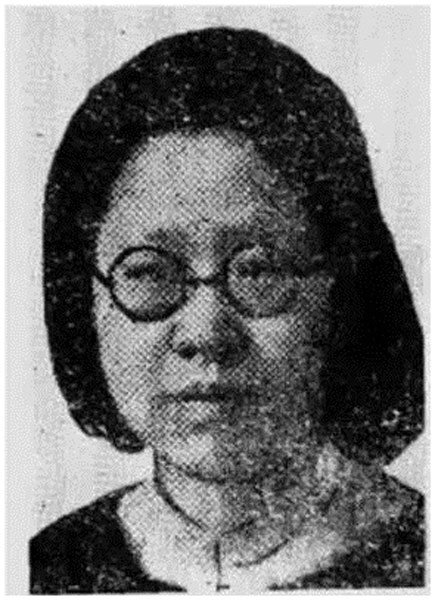
Ms. Ma was only 25 years old when she was murdered. She was in the prime of her life, just as a flower bud was about to bloom (Fig. 1).
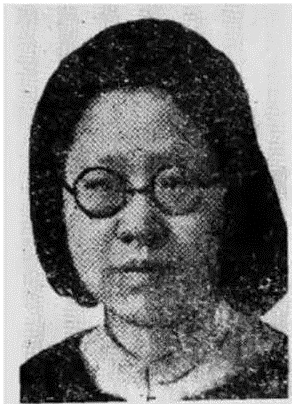
Figure 1Photo of Ms. Ma during her lifetime (Editorial Department, Geological Review, 1944a).
Shortly after the devastating tragedy, Geological Review, one of the most renowned journals in the Chinese geological community, which had only been published for eight years, published a special article entitled “A Brief Biography of Ms. Y. S. Ma” in its combined issue of Volume 9, Issues 5–6 of 1944, the same year the incident just occurred, to introduce her short but brilliant life and express its deepest condolences.
This short, one-page article describes Ms. Ma as follows: Ms. Ma was originally from Chengdu, Sichuan, China. Her ancestors settled in the northeastern border region by running gold mines. She was born on 25 October 1919 in Heilongjiang Province, China. She was intelligent and achieved considerable success in learning Japanese in her childhood. After the 18 September Incident1, her father, Mr. Boyan Ma, moved inland with his family and she temporarily resided at Jinan Municipal Middle School. They moved to Shanghai and she studied at Tongji High School, where she was able to learn German. When the War of Resistance against Japan broke out, Shanghai became uninhabitable. At that time, her father had passed away, and her four brothers had died one after the other. Ms. Ma brought her mother, Madam Yang, back to Sichuan and lived with her elder sister, Yihui, and her brother-in-law, Mr. Jingzhi Yang, in Longchang. The orphaned girl and her widowed mother faced great hardship, but Ms. Ma was determined to make progress and never gave up. She entered Hechuan National Second Middle School and graduated in the spring of 1929. She then entered a pre-university program and, due to her outstanding academic performance, was recommended for admission to the National Central University after six months, entering the Department of Geology, College of Science. Her academic performance was excellent, ranking first in her class, and she received the Shanghai Bank Scholarship and the Chairman Lin Sen Scholarship. Having already established a basic knowledge in German, she studied French as her second foreign language while in school. Through diligence and hard work, she became proficient. She graduated in the summer of 1943 and, with top marks, entered the GSC of the Ministry of Economic Affairs as an assistant engineer. Under the tutelage of Professors Tsan-Hsbun Yin and Mr. Hsu, she studied palaeontology and meticulously organized fossil specimens. During her studies, she attended a night class in Russian and was able to read it within six months. In March 1944, she went to Guiyang, provincial capital of Guizhou Province of China to attend the 20th GSC's Annual Meeting. After the meeting, she went to Western Guizhou with Mr. Hsu and Mr. Chen to investigate geology and collect data. On 24 April, she was attacked by bandits near Huangchang, which belongs to Qinglong (Annan) County. She was killed along with two of her geologist colleagues. She was only 25 years old at the time. She had just graduated from school and was fluent in six languages: Chinese, English, German, French, Russian and Japanese. She had been ranked first in school examinations 28 times (she had been ranked first in all primary, secondary and tertiary school examinations 28 times, Liao, 2015, 2020; Li, 2020), which was rare in the China. She studied diligently and strived for excellence; she was born to be a great scholar and had a bright future ahead of her, but tragically her life was ruined!
In fact, due to the dangers and hardships of the field at that time, GSC had an unwritten rule that female scholars were generally not recruited. However, Ms. Ma was exceptionally recruited by GSC because of her outstanding talent and excellent grades. Unexpectedly, the result was so unexpected and so sad.
Her graduation thesis, “The Lower Triassic Fauna of Tongzi County, Northern Guizhou”, was the first study and naming of ostracod fossils2 in the area. After entering GSC, she followed Mr. Hsu to carry out paleontological research and sorted out the fossil specimens of GSC, which was “well-organized and made great achievements” (Li, 2020). She was the first and only female geologist recruited by GSC at the time. This trip to Guizhou with Mr. Hsu was also her first field work after joining GSC, but she unexpectedly suffered this tragedy.
Based on the above biography, modern researchers of the history of geological sciences in mainland China have added the following details about Ms. Ma (Li, 2020; Liao, 2020): Y. S. Ma (25 October 1919–24 April 1944), a Hui nationality, whose ancestral home was Chengdu, Sichuan Province, China, was born in Qiqihar, Heilongjiang Province. In 1939, she was recommended to the Department of Geology of Central University and became the first female student in the department. After graduating in 1943, she was admitted to GSC of the Ministry of Economic Affairs as an assistant engineer. She was the first female geologist in GSC and studied palaeontology with Mr. Hsu, specializing in Triassic strata fossils. In 1944, after the annual meeting, she went to western Guizhou to conduct geological surveys. On 24 April of the same year, she was attacked and killed by bandits near Huangchang, Qinglong County, Guizhou Province, China, at the age of 25.
In early 1929, V. K. Ting (Ting) and Dr. Wong, the two founders of Chinese geology and the two former directors of GSC, discussed selecting some outstanding young scholars from the GSC to form a team to conduct geological surveys in the southwestern provinces of China (Zhang and Shang, 2022). In a letter to his friend Hu Shih (Suh Hu), a famous Chinese scholar, social activist and diplomat, Ting explained the purpose and significance of this southwestern geological survey as follows (Hu, 1993): First, to connect the work in Guangxi and Yunnan... To completely solve all kinds of geoscientific problems, we must go to Guizhou, which is located at the junction of the two provinces... The road to Yunnan and Guizhou is the most difficult to travel. Bringing them here to set an example and temper they can serve as models for future generations. The selected people included H. C. T'an, Y. T. Chao, deputy director of the Palaeontology Laboratory, Y. L. Wang, who had recently been transferred from Shanxi University, and T. K. Huang and C. Y. Lee, who had graduated from university less than a year ago. In order to train the geologists in topographic mapping, Shiying Zeng, who studied surveying and mapping, also accompanied the team to provide guidance. Ting specifically mentioned: “The place we are going to has always been a den of bandits, not to mention now.”
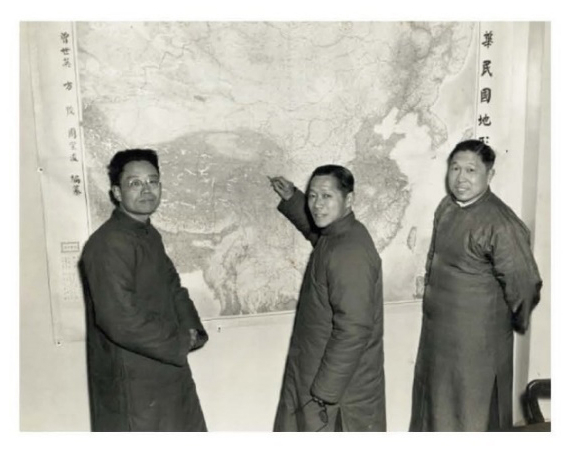
Figure 2In 1937, T. Fang (left), Shiying Zeng (center), and C. Y. Lee (right) answered questions from visiting experts from the Museum of Fine Arts, Boston, in front of a sample map of China's topography compiled by the GCS at a scale of 1:3 000 000 (Zhang and Shang, 2022).
Tragically, on 15 November 1929, Y. T. Chao, while working in the field in Zhaotong, Yunnan, was murdered by bandits in a village inn.
Upon hearing this devastating news, Ting wrote tearfully to his friend Hu Shih: “… I have not encountered such a heartbreaking thing since my mother died … He is exceptionally talented… My affection for him and the great hopes I place on him far exceed those for my six brothers. He is a student who has never been abroad, yet he can give speeches in fluent English and understand books in German and French. He is only thirty-one years old this year, and his works are already quite impressive. Where else can we find such a talent?” (Hu, 1993; Zhang and Shang, 2022). Dr. Wong was equally saddened by Y. T. Chao's untimely death, and had hoped that Zhao would become the director of GSC. A separate article will be dedicated to introducing Y. T. Chao's life, achievements, and scientific contributions in the near future. This will not be elaborated upon here.
From the late 1930s, due to the severe impact of the Japanese invasion of China, GSC had to focus its fieldwork on the extremely underdeveloped southwestern region of China. At that time, this area was plagued by extremely poor public security, rife with bandits and robbers who would stop at nothing to stop them. The remote, deep forests that geologists had to personally venture into were, in effect, havens, even paradises, for these outlaws. This was the harsh reality that Chinese geologists of that era had to face.
Due to GSC's enormous influence both domestically and internationally, and the fact that its founders, Ting and Dr. Wong, had direct access to the highest levels of Chinese government, coupled with their own significant social influence, geologists were often escorted by military and police escorts from various county governments along their field expeditions (Fig. 3), ranging from 2–3 people to 7–8 people. However, due to funding constraints and/or other complex reasons, some scholars were unable to obtain adequate protection from local military and police during their field expeditions.
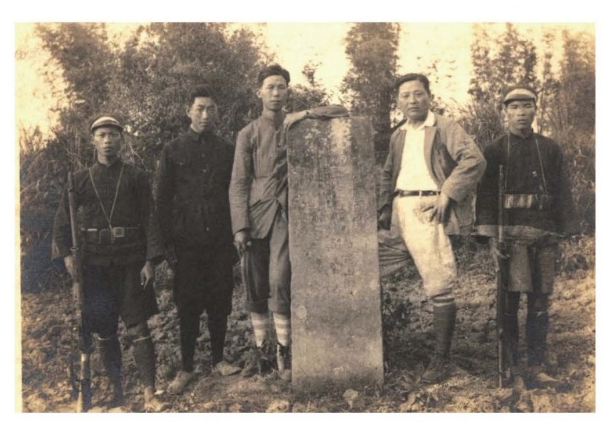
Figure 3A group photo of Chinese geologist C. Li (second from right) and others with their guards during a geological field survey in the 1920s (Zhang and Shang, 2022).
In April 1944, fifteen years after Mr. Y. T. Chao was murdered by bandits, a similar tragedy befell geologists at GSC. This time, three outstanding young geologists were killed. One of them was a woman, an extremely rare find in the field at the time in China. The other two were Mr. Hsu (Fig. 4), a researcher at GSC, and Mr. Chen, an engineer (Fig. 5). This unprecedented tragedy in the history of modern Chinese science shocked the nation and the public.
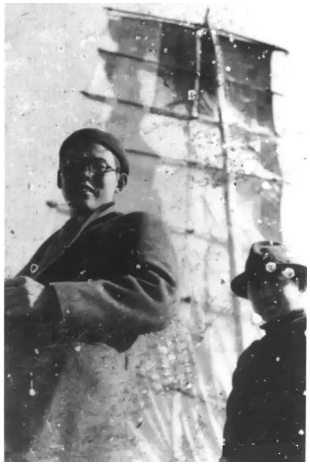
Figure 4The only surviving photograph of T. Y. Hsu (left) during his field geological survey (Ai, 2018).
T. Y. Hsu (1908–1944) entered the Department of Foreign Languages and Literature at Fudan University in 1927, while also studying social sciences. In 1928, he transferred to the Department of Political Science (Editorial Department of Geological Review, 1944; Li, 2020; Liao, 2020). In 1931, he entered the Department of Geology at the University of Montpellier. After obtaining his master's degree in the spring of 1935, he conducted research on Cretaceous crustaceans and Carboniferous coral fossils at the Palaeontology Research Laboratory of the University of Paris, and soon joined the French Geological Society. He returned to China in the summer of 1935, and in November of the same year, he joined the Palaeontology Research Laboratory of GSC as an associate researcher. After the outbreak of the War of Resistance against Japan, he moved westward with GSC to Changsha, and later to Beibei, Chongqing. In 1942, he was promoted to researcher and concurrently served as the director of the Invertebrate Group of the Palaeontology Research Center. From the time he joined GSC until his death, he went to the field 21 times in ten years, and published 29 palaeontology papers in both Chinese and foreign languages. In 1940, he received a research grant from GSC in memory of Mr. Y. T. Chao, and in 1944, he received the second V. K. Ting Memorial Scholarship from the Academia Sinica. He was only 36 years old when he was brutally murdered in 1944. By the time of his death, he had completed as many as 74 works in just nine years, with five more unfinished. In 1949, after identification by Paleontologist Enzhi Mu, the crinoid fossil discovered by Mr. Hsu in Guanling, Guizhou, China in 1944, the last year of his life, was named “Traumatocrinus hsui Mu”. Mr. Hsu was the founder of Triassic stratigraphy research in China (Unnamed, 2018). During his Triassic geological survey in Hubei and Southwest China, he established the biostratigraphic sequence of bivalve biota in mainland China and proposed the foundational theory of Triassic division and correlation. His book “Triassic in Southwest Guizhou”, co-authored with Mr. Chen, systematically expounded the characteristics of Triassic strata in the region. Before his death, he served as the editor of “Bulletin of the Geological Society of China” and wrote many popular science articles on geology, promoting public understanding of geology.
K. Chen (1916–1944, Fig. 5) was admitted to the Department of Natural History at Xiangqin University of Guangdong Province (later renamed Guangdong College of Arts and Sciences) in 1937. He conducted research on the geology of the Lianxian area of Guangdong while he was in school, and wrote an article entitled “A General Survey of the Geology along the Lianshan Dazhangling in the Eastern Slope of Lianxian County” (Li, 2020; Liao, 2020). After graduating in the summer of 1941, he first joined the Geological Survey of Guangdong and Guangxi Provinces of China, where he co-authored “Geological and Mineral Resources of Jiufeng in Lechang” with K. S. Mo and Lianjie Liu. His graduation thesis, “Geology of the Eastern Slope of Lianxian County, Guangdong Province”, was deeply appreciated by the reviewers C. C. Young, a Paleontologist, and T. K. Huang, a geologist, of GSC, who recommended Chen to work at GSC. K. Chen joined GSC in September 1942 as an assistant engineer and was promoted to a fifth-level engineer in September 1943. K. Chen worked with T. Y. Hsu on paleontological research and accompanied him on investigations of the Triassic geology in southwestern Guizhou, China. The two co-authored several papers on the Triassic fossils in Guizhou. Although his specialty was Triassic palaeontology, Chen also devoted considerable time to mineral resource surveys and wrote and published reports such as “A Brief Geological Report on the Xiangxi Coalfield in Zigui County, Hubei” (Brief Report of GSC, No. 19), “Aluminum Deposits in Yunnan”, and “Phosphate Deposits in Yunnan” (Quarterly Journal of the China Resources Commission, Vol. 1, No. 2) to support China's War of Resistance against Japan. Chen himself drew most of the fossils collected by Mr. Hsu. He was only 28 years old when he was tragically murdered by bandits in 1944.
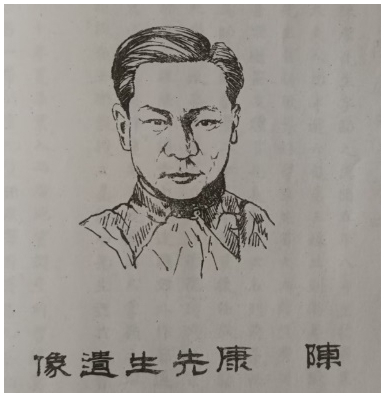
Figure 5Hand-drawn portrait of Mr. K. Chen (GSC, 1944b).
At the time, Ma, Hsu, and Chen had just attended the annual meeting held in Guiyang from 1 to 8 April. As arranged by GSC, they were heading to western Guizhou to map a 1:200 000 geological map and conduct paleontological surveys and fossil specimen collection. The three arrived in Panxian County, Guizhou on 17 April and worked there for three days before arriving at Yangsongchang in the county on the evening of the 20 April to stay overnight. The next day, they walked 30 km to Guanziyao in Xingzhong Township, Puan County, where they worked for a day on the 22 April. On the morning of the 23 April, they traveled approximately 13 km to Wuliping and stayed overnight at the home of the village head, Yongchang Ye. On the 24th, they planned to travel 30 km from Wuliping towards Maokou, but unfortunately, they were robbed and killed by bandits near Huangchang in Qinglong County.
Subsequent interrogation of the perpetrators revealed the details of the three persons' deaths (Hou, unpublished, 1944). On the 22nd, while at the market in Guanziyao, the three were inadvertently targeted by a pair of greedy eyes. This man, named Zhongsan Yi (Z. S. Yi), lived in Meihuaqing, approximately 1.5 km from Guanziyao. Z. S. Yi noticed that these three outsiders had “quite a few bags and used new banknotes for shopping”. Seeing the potential for wealth, he conspired with Zhanhong Long, a notorious bandit from Wuliping, to rob them.
At that time in Guizhou Province, small groups of scattered bandits, who were farmers in ordinary times but would gather to rob travelers, were “everywhere”. Z. S. Yi was such a bandit leader, known as “Boss” by the other bandits. He had previously served in the army of a local warlord, and was called “Commander Yi” by the locals. He was also the cousin of Rongqian Yi, a prominent local figure and the chairman of the Qinglong County Provisional Council. Under Z. S. Yi's command, the habitual bandit Zhanhong Long “gathered more than 20 bandits from Puan and Qinglong counties” and “each took on the roles of spy, lookout, porter, and robbery operative, and waited in several groups” to prepare for the robbery. Because these small groups of scattered bandits did not have their own firearms, Z. S. Yi “sent his subordinates overnight to deliver three rifles and two semi-automatic rifles to each bandit”.
Although Hsu and his two companions were unaware that they were being targeted by bandits, they were aware of and wary of the poor security situation in the area. Because of the tragic case of Y. T. Chao, the former director of the palaeontology research Center of GSC, who was robbed and murdered by bandits during a field survey in Yunnan in 1929, Hsu inquired about the security situation in Xingzhong Township from the township head, Shaoqian Yan, while they were staying there. Before setting off on the 23 April, Hsu specifically requested the township head to send able-bodied men to accompany and protect them. However, the township head assured them that his jurisdiction was absolutely safe and that he could take full responsibility, resolutely refusing their request.
Early on the 24 April, the three set off from Wuliping to continue their journey. Before departing, Village Head Yongchang Ye specially hired three porters to carry their luggage and act as guides to lead the way. Around 11:00 a.m., guided by bandits disguised as porters, they arrived at a secluded spot near Huangchang in Qinglong County, about 8 km from Wuliping – an ambush set up by the bandits. Nine bandits, already lying in wait in the roadside woods, rushed out. Hsu, walking in front and about 2 m behind the porters, was suddenly shot by a bandit; the bullet pierced his waist and abdomen, killing him instantly. Ma and Chen, walking behind, heard the gunshot and “immediately tried to run away”, but were blocked by the bandits who “fired warning shots, making escape impossible, and were captured”. Having succeeded, the bandits dragged Ma and Chen for more than 10 km, and around 06:00 pm, shot Chen and dumped his body in the Maluhe Forest in Qinglong County. Although Ma righteously warned the bandits, “I am a university graduate and a government official. You all have sisters. Please kill me, do not defile me…” The more than ten ferocious bandits ignored her and, utterly devoid of conscience, gang-raped and murdered Ma. The robbers robbed the three of their belongings, including 53 000 yuan in cash, luggage, clothes, and geological instruments. Ms. Ma was shot in the back and out of the chest, while Mr. Chen was shot through both chests and died a gruesome death (GSC, 1944a; Hou, unpublished, 1944).
When Hsu was the first to be killed, one of the porters, named Liegou An, fled the scene and reported the incident to the local headmen and village heads of Qinglong and Puan counties. The location where Hsu was murdered was only about 10 km from the Datian Township Office in Qinglong County. If the local headmen and village heads had immediately organized a pursuit, Ma and Chen might still have been rescued. However, it wasn't until the next day that the local government sent personnel to investigate. Of course, the extremely backward transportation and communication tools at the time were also one of the objective factors that prevented the two from being rescued in time.
While Hsu and his two companions were conducting field geological surveys in Pu'an and Qinglong, their colleague, H. Y. Hou, an investigator at GSC, was conducting research on the relationship between plants and soil in nearby Panxian (Hou, unpublished, 1944). Subsequent events proved that Hou made unparalleled and enormous contributions in urging the relevant authorities to solve this major case and in maintaining communication with the GSC leadership in Chongqing, the wartime temporary capital. To strengthen the handling of the aftermath and prevent Hou from fighting alone in Guizhou, Y. Hsiung, a GSC's soil scientist from Guizhou, and C. Y. Hsieh, the director of the Mineral Exploration Bureau and a researcher at GSC, were sent to Guizhou to assist. Due to space limitations, details will not be elaborated upon.
The main culprit, Z. S. Yi, had been shot and killed on 12 May while resisting arrest during his escape. Not long after, three more bandits involved in the murder of the three geologists were killed on the spot, and the remaining thirteen were captured and executed by firing squad in Puan County on 4 June 1944, after interrogation and verification of the facts.
Finally, a fundraising campaign was jointly initiated by renowned Chinese geologists, other scholars and social elites, etc. The funds were used for the survivors' care of Hsu, Chen, and Ma, as well as for the education of Hsu's orphans. To permanently commemorate the three scholars who sacrificed their lives, a portion of the donations was used by GSC to establish the Y. S. Ma Memorial Prize, the T. Y. Hsu Memorial Prize, and the K. Chen Memorial Prize. The three awards mentioned above have been reviewed since 1945 and are granted to relevant scholars. The Y. S. Ma Award is mainly awarded to female geologists, while the K. Chen Award is mainly awarded to young scholars. These awards ceased to exist after 1949.
The Y. S. Ma Award was presented from 1945 to 1949, and was awarded five times in total (Liao, 2020; HPGS, 2022; Geological Survey of China, 2024). Several of the recipients later became academicians of the Chinese Academy of Sciences, with notable figures such as Jishang Chi and Yichun Hao being recipients in 1945 (Geological Survey of China, 2024). Among them, Ms. Chi later earned both her master's and doctoral degrees from Bryn Mawr College in Pennsylvania, USA, eventually becoming a prominent geological educator, an Academician of the Chinese Academy of Sciences, and one of the pioneering modern petrologists in mainland China. Another award recipient, Ms. Hao, dedicated her long career to research and teaching in biostratigraphy, paleontology, and micropaleontology, and was elected an Academician of the Chinese Academy of Sciences in 1980. The tragedy involving Ms. Ma dampened, to some extent, the enthusiasm of women in mainland China for pursuing careers in geology; this, combined with traditional cultural constraints – such as the view that women should not appear prominently in public – resulted in even fewer women entering the field. Even the few women who studied geology out of curiosity typically took on indoor roles after graduation, such as managing library resources or documentation, rather than conducting fieldwork. To this day, few women are willing to undertake field geological surveys, and many geological institutions and mining companies remain reluctant to hire female geologists. In short, for a long period following Ma's death – while no similar tragedies occurred – women were virtually absent from the ranks of those conducting field geological surveys. The aforementioned award recipients, Ms. Chi and Ms. Hao, spent the majority of their post-undergraduate years pursuing graduate studies either abroad or within China. Prior to 1949, they largely avoided fieldwork in remote, rugged regions like Southwest China, which were plagued by banditry. Although the new government established in 1949 cracked down heavily on banditry nationwide – greatly improving security – the proportion of women engaged in field geological surveys remained low due to the aforementioned traditional cultural factors in main land China.
On 11 June, the Geological Society of China and GSC jointly held a memorial service for Ma, Hsu, and Chen in the auditorium of GSC in Beibei, Chongqing, China. The venue displayed portraits of the three (as shown in Fig. 5). More than 200 people attended, including figures in the Nationalist government's military and political circles, as well as renowned educators and foreign scholars such as Joseph Needham.
With the efforts of all parties, the coffins of the three scientists, Ma, Hsu, and Chen, were transported to Guiyang. They were buried in Huaxi on 21 June, and a monument was erected in their memory. By the end of 24 June, of the bandits who murdered Ma, Hsu, and Chen had been apprehended and/or brought to justice. Dingchang Wu, the chairman of Guizhou Province, and the county magistrate of the county where the incident occurred resigned in disgrace.
On 5 August, the Executive Yuan notified the Ministry of Economic Affairs that, “based on the resolution of the 670th meeting of this Yuan, we request the National Government to issue an official commendation and grant T. Y. Hsu CNY 5000, and K. Chen and Y. S. Ma CNY 3000 each”. Soon after, the National Government approved the Executive Yuan's request and officially issued a commendation order for Ma, Hsu, and Chen:
-
Order of the Nationalist Government, 30 August 1944
-
The Executive Yuan reports: According to a report from the Ministry of Economic Affairs, three researchers from the Geological Survey of China – T. Y. Hsu, K. Chen, and Y. S. Ma – were dispatched to western Guizhou to investigate geology and mineral resources. They were tragically killed by bandits. The Ministry requests that an official commendation be issued. It is understood that T. Y. Hsu and the others possessed specialized knowledge and performed their duties with courage and bravery. Their deaths in the line of duty are deeply mourned. An official commendation should be issued to show respect and remembrance.
-
Chairman: Chiang Kai-shek
-
Premier: Chiang Kai-shek
GSC was founded in Beijing (Peking) in 1913, initially named the Geological Survey Institute of the Mining Administration Department, the Ministry of Industry and Commerce, Republic of China. Due to repeated changes in the name of its supervising agency, the institute was successively renamed the Geological Survey Institute of the Ministry of Agriculture and Commerce, the Geological Survey Institute of the Ministry of Agriculture and Mining, the Geological Survey Institute of the Ministry of Industry, and the Geological Survey Institute of the Ministry of Economic Affairs. In 1944, it was named the Geological Survey of China (GSC) under the Ministry of Economic Affairs. Its location was moved from Beiping (Peking) to Nanjing in 1935, and during the War of Resistance against Japan, it was forced to relocate again to Changsha and Chongqing respectively. However, its physical existence remained uninterrupted. Renowned geologists V. K. Ting, Dr. Wong, T. K. Huang, and Tsan-Hsbun Yin successively served as directors and/or acting directors. In 1944, the director was C. Y. Lee. The institute was praised by Tsai Yuanpei, a prominent contemporary Chinese educator, as “China's first truly scientific research institution”. GSC has made pioneering contributions to many disciplines, including geology, geography, mineral resources, palaeontology, paleoanthropology, seismology, soil science, cartography, and archaeology, achieving a series of major scientific research results with global influence, such as the excavation and research of “Peking Man” at Zhoukoudian. “In the years before 1949, GSC was a source of great pride for the Chinese people (Li, 2020).”
After the outbreak of the War of Resistance against Japan, Dr. Wong, then director of GSC, twice published “Letters to Colleagues of GSC”, reminding everyone that while scientific truth knows no borders, scientists have a motherland”, and “scientific pursuits should never be used as a pretext to abandon the nation”. He also urged everyone to use their professional knowledge to serve the war effort, to conduct “rapid and detailed investigations of urgently needed mineral resources, and to compile illustrated guides”.
After GSC was forced to relocate with the Nationalist government, scientists not only continued scientific research and field investigations, but also devoted more energy to geological and mineral resource surveys in the rear areas, directly contributing to the development of industry and mining in the rear and to the defense of the country. For example, Mr. Hsu not only continued his paleontological research, writing scientific papers and giving academic lectures, but also served as assistant secretary of the Geological Society of China and editor of its journal, edited and proofread the “Journal of the Geological Society of China”, compiled a secondary school natural history textbook (general geology and geological history section) on behalf of the National Compilation and Translation Bureau, and actively mentored young scholars.
At the memorial service for the three persons on 11 June, Dr. Wong delivered a deeply moving and indignant speech: “I am particularly saddened by two things today. First, 14 % of our geological community has died tragically in the line of duty, one after another, yet this has not received sufficient attention from society. This is truly insufficient to inspire the future. Second, when someone is killed by bandits, there is little sympathy shown. The deaths of such important scholars are considered commonplace. While we ourselves should constantly strive to improve, the local authorities should also feel ashamed.” Dr. Wong even likened Chinese science to the dark ages of the 16th century: “Today is like the 16th century; scientists must make continuous sacrifices to break through the darkness.”
On the other hand, within his authority, Dr. Wong secured as much financial compensation as possible for the families of Hsu and the others. He ultimately increased the original special allowance of CNY 5000 for T.Y. Hsu and CNY 3000 each for K. Chen and Y. S. Ma tenfold, thus achieving the effect of “comforting the dead and comforting himself”.
Following the murder of the three young geologists, major newspapers and other news media reported and mourned their deaths. Even after the change of regime in mainland China, and especially after the Reform and Opening Up, numerous articles and books continue to express deep remembrance and mourning. Since the establishment of GSC, many outstanding geologists have made significant contributions. Among them, many Chinese geologists who died young are particularly regrettable and will forever live in people's hearts. They are Y. T. Chao, S. Chu, Y. S. Chi, T. Y. Hsu, K. Chen, Y. S. Ma, and the founder V. K. Ting, among others.
Fortunately, since the tragic deaths of Ms. Ma and two others in the line of duty in 1944, this country has never again witnessed a case of organized murder of scientists in the field for financial gain. Although there are still occasional instances of field workers accidentally dying in the field, none of these deaths are related to murder. This is a testament to the triumph of civilization over barbarism, a significant advancement in society, and a stroke of good fortune for all scientists.
The data that support the findings of this study is available from the author upon reasonable request.
The author has declared that there are no competing interests.
Publisher's note: Copernicus Publications remains neutral with regard to jurisdictional claims made in the text, published maps, institutional affiliations, or any other geographical representation in this paper. The authors bear the ultimate responsibility for providing appropriate place names. Views expressed in the text are those of the authors and do not necessarily reflect the views of the publisher.
I would like to express my sincere gratitude to Ms. Erping Zhang, an expert in the history of Chinese geology, for providing some of the images and related materials, and to Researcher Lisheng Zhang, an Economic Geologist and also an expert in the history of geology, for his assistance. Without their strong support, the data collection and organization for this article would have been extremely difficult!
Last but not least, I would like to thank the editors and reviewers for their time and professional academic advice, which made this article more rigorous and academic.
This paper was edited by Kristian Schlegel and reviewed by Zhihui Zhang and Yongqiang Yang.
Ai, L. S.: The murder of three scientists by bandits in Guizhou shocked the nation, https://baijiahao.baidu.com/s?id=1612825654468974691&wfr=spider&for=pc (last access: 27 December 2025), 2018 (in Chinese).
Geological Survey of China: Yisi Ma, https://mp.weixin.qq.com/s? (last access: 21 November 2026), 2024 (in Chinese).
Editorial Department of Geological Review (GSC): Portraits of the Republic of China geologists K. Chen, T. Y. Hsu, and Y. S. Ma, Geol. Rev., 9, 5–6, 1944a (in Chinese).
Editorial Department of Geological Review (GSC): A brief biography of Ms. Y. S. Ma, Geol. Rev., 9, 8–9, 1944b (in Chinese).
Geological Survey of China (GSC), Ministry of Economic Affairs: Obituary of Mr. T. Y. Hsu, Mr. K. Chen and Ms. Y. S. Ma, May 15, 1944 (unpublished, in Chinese).
Hebei Provincial Geological Society (HPGS): Centennial Commemorative Articles of the Geological Society of China – Awards of the Geological Society of China (1), https://www.hbsdzxh.org.cn/website/getInfo?id=6e743bb0-7c39-46a5-b8f3-1eabbb083f2c (last access: 3 August 2026), 2022 (in Chinese).
Hu, S.: Biography of V. K. Ting (Wenjiang Ding), Hainan Publishing House, 188 pp., 1993 (in Chinese).
Li, X. T.: A commentary on the case of the deaths of T. Y. Hsu and two other geological experts during the War of Resistance Against Japan, Geological Society of Jiangsu Province, China, http://www.jsdzxh.cn/news/1394.cshtml (last access: 28 December 2025), 2020 (in Chinese).
Liao, L. P.: Remembering Y. S. Ma on Qingming Festival – A tribute to Y. S. Ma, a distinguished female geologist who dedicated her life to geoscience, Guizhou Geology, 32, 160–162, 2015 (in Chinese).
Liao, L. P.: Geoscience heroine Y. S. Ma, Geological Society of Jiangsu Province, China, http://www.jsdzxh.cn/news/1387.cshtml (last access: 18 January 2026), 2020 (in Chinese).
Zhang, E. P. and Shang, Y. T.: Bingmasi No. 9 – A Historical Study of the Site of the Geological Survey of China, Beijing, Geological Publishing House, 244 pp., 2022 (in Chinese).
The “September 18 Incident”, also known as the “Fengtian Incident” or the “Liutiaohu Incident”, was an incident on 18 September 1931, in which the Japanese Kwantung Army stationed in Northeast China suddenly attacked Fengtian (now Shenyang, capital of Liaoning Province) and occupied Northeast China by force.
The Ostracodile fossils are fossils formed from the calcareous shells of ostracods, which belong to the class Crustacea of the phylum Arthropoda. They are tiny, usually 0.5–2 mm long, with their bodies enclosed in two shells. The shell surfaces are smooth and/or decorated with reticulations, tubercles, spines, etc. There are approximately 33 000 species.